.png)
Selling at Pets at Home: Benefits, Popular Products, and Marketing Tips

Pet owners don’t buy like casual shoppers. They’re buying for a dog that chews through toys in two days, a cat that refuses certain textures, a rabbit with a sensitive stomach, or a puppy that needs the basics right now. That’s what makes the pet category so interesting, and why selling through a trusted pet retail environment can be such a strong move.
Pets at Home is already a familiar stop for people who care deeply about their animals. For suppliers, makers, and product brands, that means your products can meet customers when they’re actively looking for help, not just browsing out of boredom.

Why selling at Pets at Home can be a smart move
One of the biggest benefits is built-in customer intent. People visit pet stores because they need food, bedding, toys, grooming items, or advice. That gives your product a better chance of being noticed by someone who already has a pet-related problem to solve.
There’s also the trust factor. Pet owners tend to be careful about what they give their animals. If a product appears in a well-known pet retail space, it can feel more credible than something found at random online.
Selling at Pets at Home can also help products reach a broad mix of households. Dog owners, cat owners, small pet owners, fish keepers, and new pet owners all have different habits. A strong retail presence can introduce your product to several groups at once.
The best opportunities usually come from products that do at least one of these things well:
Make pet care easier
Support comfort, play, or training
Fit into repeat buying habits
Solve a clear owner concern
Feel safe, practical, and good value
That last point matters. Pet owners love their animals, but they still compare quality, price, ingredients, durability, and convenience.
Popular products pet owners often look for
Pet trends shift, but some categories stay consistently strong because they tie directly to daily care.
Food, treats, and feeding accessories
Food and treats are high-interest categories because they’re bought often. Customers may look for age-specific options, breed-size options, sensitive digestion formulas, natural ingredients, or simple treat choices for training.
Feeding accessories also do well when they solve a specific problem. Slow feeders, raised bowls, travel water bottles, and treat pouches are easy for customers to understand at a glance.
Toys and enrichment products
Toys aren’t just fun extras. Many pet owners buy them to reduce boredom, support exercise, or help with chewing behavior.
Popular options often include:
Tough chew toys for dogs
Puzzle feeders and treat toys
Cat wands, tunnels, and scratchers
Small animal chew toys
Balls, ropes, and fetch toys
The stronger the product’s purpose, the easier it is to sell. “Keeps a dog busy while you make dinner” is more useful than a vague claim that a toy is fun.

Grooming and hygiene items
Grooming is another practical category, especially for owners who want to manage everyday messes at home. Brushes, nail clippers, shampoos, wipes, dental chews, litter products, and odor control items all answer common needs.
For these products, clarity matters. Customers want to know which coat type, pet size, or use case the item fits.
Beds, crates, carriers, and comfort products
Comfort products can appeal to both new and experienced pet owners. New pet owners need the basics. Longtime owners may be replacing worn items or improving their pet’s setup.
Beds, blankets, calming spaces, carriers, crates, cage accessories, and aquarium decor all benefit from strong visuals. If a shopper can picture the product in their home, the buying decision gets easier.
How to market pet products well in-store
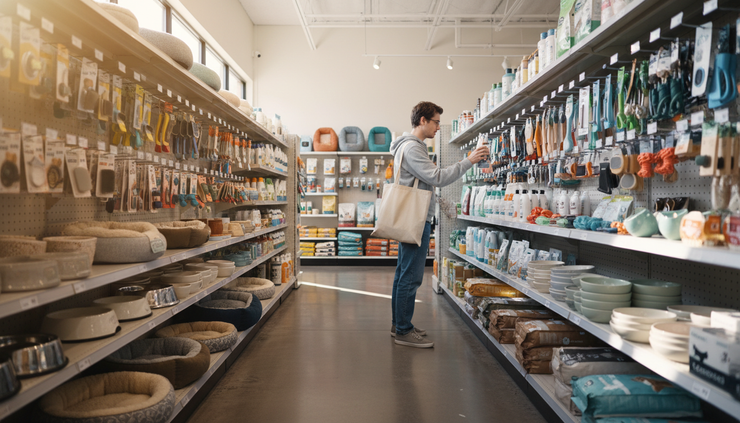
In-store marketing works best when it helps people make a quick, confident choice. A person standing in an aisle shouldn’t need to read a wall of text to understand what your product does.
Start with clear packaging. Use plain language. Put the main benefit where shoppers can see it fast. If the product is for puppies, senior cats, heavy chewers, long-haired dogs, or indoor rabbits, make that obvious.
Good in-store product messaging usually answers these questions:
Who is it for?
What problem does it solve?
How do I use it?
What size, flavor, or type should I choose?
Why should I trust it?
Product placement also matters. A dental chew near oral care items makes sense. A puppy training treat near collars, pads, and starter supplies can catch the right customer at the right moment.
If sampling, demos, or staff education are available, keep them simple. Store teams are more likely to explain a product if the key points are easy to remember. Give them short, useful product notes, not a long script.
How to support sales online
Online shoppers need a different kind of help. They can’t touch the product, check the size in person, or ask a nearby associate. Your job is to remove doubt.
Use product photos that show scale, texture, and use. For example, show a dog bed with a medium-sized dog nearby, or a carrier being held by a person in casual clothes. Avoid relying on a single front-facing pack shot.
Product descriptions should be specific without getting too long. Mention materials, dimensions, pet size guidance, cleaning instructions, flavor options, and safety notes when relevant.
Customer reviews can also shape buying decisions. People often look for comments from owners with similar pets. A cat owner with a picky eater wants to hear from another cat owner, not a generic review.
For online discovery, it helps to use the words customers actually search for. That might include simple phrases like “puppy teething toy,” “large dog bed,” “cat litter odor control,” or “rabbit chew sticks.” Keep it natural and accurate.
Understanding what customers really need
The best pet products aren’t based on guesswork. They come from watching what owners struggle with.
A dog owner may not say, “I need enrichment.” They might say, “My dog gets bored when I’m out.” A cat owner may not ask for “hydration support.” They might say, “My cat doesn’t drink much water.” Those everyday phrases reveal real buying triggers.
Pay attention to:
Life stage
Pet size and breed traits
Owner routines
Space at home
Budget
Health sensitivities
Repeat purchase needs
This kind of customer understanding helps with product design, packaging, pricing, and messaging. It also helps you avoid the common mistake of making a product sound clever when customers just want to know if it’ll work for their pet.
FAQ
What types of products are best suited for Pets at Home?
Products tied to daily care often fit well, including food, treats, toys, grooming items, bedding, carriers, litter, and small animal accessories. Items that solve a clear problem are usually easier for customers to understand.
Do pet owners care more about price or quality?
They care about both. Many shoppers will pay more for products they believe are safe, durable, useful, or better suited to their pet. Clear value matters more than being the cheapest option.
How can a new pet product stand out?
Make the benefit easy to spot. Use simple packaging, specific product descriptions, helpful photos, and clear guidance on which pet the item is for.
Is online selling as important as in-store placement?
Yes. Many customers research online before buying, even if they later visit a store. Strong photos, accurate details, and helpful reviews can support both online and in-store sales.

The takeaway for pet product sellers
Selling through a trusted pet retailer can give your product real visibility, but the product still has to earn attention. Focus on clear benefits, honest details, useful packaging, and customer needs that show up in everyday pet care.
If you’re weighing up retail opportunities and want help thinking through a practical next step, you can get in touch here.
The brands that do best are usually the ones that make life easier for both pets and the people who care for them. Keep that at the center, and your product has a much better shot at standing out.


Comments